
The finance minister's assertion that industry should not expect any spectacular announcements in the 2024 interim Budget suggest that the electoral imperatives of more tax concessions or higher expenditure on welfarist programmes could be far less pronounced than they were before the 2019 interim Budget, expects A K Bhattacharya.
The Centre will release Rs 95,082 crore as tax devolution to the states this month after including one advance instalment to help them push their capital expenditure, Finance Minister Nirmala Sitharaman said on Monday. After a meeting with all chief ministers and state finance ministers, Sitharaman said states had said that it would be helpful for them if the tax devolution is front loaded.
The monsoon session of Parliament is likely to begin in the third week of July and end by mid August.

Obama to push for expansion of Foreign Account Tax Compliance Act.
It is thanks to the policy of liberalisation conceived by Manmohan Singh and enforced by P V Narasimha that the Indian economy has now become the world's 5th largest economy by nominal GDP, asserts Dr Sudhir Bisht.
'The economy needed 3 or 4 major fixes. The major one was, of course, the direct tax structure, but we ended up complicating the existing convoluted tax structure,' says M R Venkatesh, chartered accountant and lawyer.

The Narendra Modi government's alacrity in promoting ease of tax administration, a critical component in the ease of doing business index, has set in motion several incremental policy and administrative reforms, says Mukesh Butani.

India has emerged as one of the top three choices for investments in the next 2-3 years, with more than two-thirds of respondents in a survey of multinational companies (MNCs) citing the country as their number one choice for future investments. According to the FDI survey released on Tuesday by CII in association with EY, about half of the respondents see India amongst the top three economies or leading manufacturing destinations of the world by 2025.

Bringing petrol, diesel and other petroleum products under the single nation-wide GST regime will reduce taxes on these products and increase the revenue of both the Centre and states, Union Minister Nitin Gadkari said on Wednesday. Finance Minister Nirmala Sitharaman will definitely try to bring petrol and diesel under GST if she gets the support of the state governments, said Gadkari while addressing the Times Now Summit virtually. "In the GST Council, finance ministers of states are also members.

The rising goods and services tax (GST) and personal income-tax collections may bolster the Narendra Modi government's ability to announce new schemes or enhance existing ones.

The BJP is the preferred choice because it offers what the Mughals and later British offered in their time: A stable polity and an environment in which business could function, explains T N Ninan.

'Tax cuts will have only marginal effects in the short run and significant positive effects in the medium term,' says Shankar Acharya, former chief economic adviser to the Government of India.
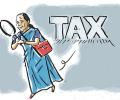
Finance Minister Nirmala Sitharaman on Thursday said taxpayer base has almost doubled to 1.28 crore in four years of rollout of the historic tax reform and the enhanced GST mop up in the recent months should now be the "new normal". In a written message to tax officers on the fourth anniversary of GST rollout, she said implementing any reform of this scale in a large and diverse country like India can be highly challenging, but GST has brought about ease in taxpayer compliance and reduced common man's tax burden.
Supporters say the new sales tax will add up to two percentage points to India's economic growth
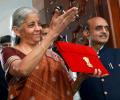
Finance Minister Nirmala Sitharaman will set a record by presenting the sixth Budget in a row -- 5 annual Budgets and one interim -- a feat achieved so far only by former Prime Minister Morarji Desai. With the presentation of interim Budget on February 1, Sitharaman will surpass the records of her predecessors like Manmohan Singh, Arun Jaitley, P Chidambaram, and Yashwant Sinha, who had presented five budgets in a row. Desai, as Finance Minister, had presented five annual Budgets and one interim Budget between 1959-1964. The interim Budget 2024-25 to be presented by Sitharaman on February 1, will be a vote-on-account that will give the government authority to spend certain sums of money till a new government comes to office after the April-May general elections.

The original DTC draft was put in the public domain in 2009 but revised the next year before being presented in Parliament.
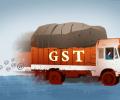
No longer a discretion of the tax administrator, the audit of returns filed by taxpayers is now based on a selection by algorithms, notes Tarun Bajaj.
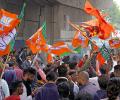
Senior advocate Prashant Bhushan, who appeared for the petitioners in the court, said at least 30 shell companies purchased electoral bonds worth over Rs 143 crore.

There is a need to bring in legal/constitutional changes, reforms in central tax system and state tax systems, said M Govinda Rao, director, National Institute of Public Finance and Policy.

Growing at a robust rate due to economic reforms in key sectors like digitisation and infrastructure, India has emerged as a star performer and is projected to contribute more than 16 per cent of the global growth, the International Monetary Fund said on Monday. "What we have been observing for quite some time now is that India has been growing at a very robust rate. "It's one of the star performers when it comes to real growth when you look at peer countries.

The move will establish a level-playing field for domestic investments in start-ups compared to foreign-based sources.

Common return for excise duty and service tax was envisaged when 119 services were taxed.

Finance Minister Nirmala Sitharaman will keep on the path of fiscal consolidation and opt for narrowing the FY24 fiscal deficit to as low as 5.8 per cent in the upcoming Budget, analysts said on Tuesday. The government may go for a fiscal deficit number which will be far lower than the 6.4 per cent of GDP budgeted for FY23, they said, pegging the Budget figure for the next fiscal in the range of 5.8 - 6 per cent. Given the fact that this will be the last full Budget of the present government, there may be a temptation to make it into an expansionist one.
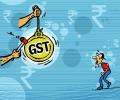
The broad trends of GST collections will make you wonder if indeed the biggest indirect tax reform in the country has led to a real improvement in revenues, notes A K Bhattacharya.

Some experts had said the Budget did not have much in terms of big ideas.

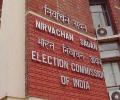
The Election Commission (EC) had, in 2019, flagged its concerns in the Supreme Court on the changes made in several laws relating to political funding to facilitate the electoral bonds scheme, saying it will have 'serious repercussions' on transparency.
Finance ministry lines up major plans to be implemented within three months.
.jpg)
The year 2014 was one of the most challenging years for India. For two consecutive years our GDP growth was sub 5 per cent. Employment generation had declined, the revenue buoyancy was low and the country had become investment starved.
Premised on the 'best-case scenario' in terms of growth and revenue, the Budget seems unprepared for a possible slowdown.

'We can go somewhere between 35 per cent and 40 per cent.'
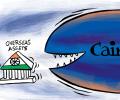
The government on Thursday brought a bill in the Lok Sabha to withdraw all back tax demands on companies such as Cairn Energy and Vodafone and said it will refund the money collected to enforce such levies.
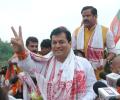
Following passage of the Constitution Bill, 2014, Dass and Finance Minister Himanta Biswa Sarma, who introduced it in the House, exchanged sweets.

'We have the more difficult reforms to do such as the reduction of subsidy, the insurance and pension sector reform, eliminating bureaucratic red tape and implementing Goods and Services Tax'

Among the Sensex firms, Larsen & Toubro, UltraTech Cement, JSW Steel, Titan, Bajaj Finance, Wipro, Tech Mahindra and Nestle were the major laggards. Maruti, Power Grid, Axis Bank, State Bank of India, NTPC, HDFC Bank, ITC and IndusInd Bank were the gainers.

CEOs expect populist measures in the Budget, to help the poor and marginalised, who make up for the largest section of voters.
The party promised to contain inflation, pursue tax reforms and promote foreign investments.

India and the US on Monday committed to further improving bilateral ties, exploring alternate mechanisms for funding renewable energy and actively pursuing the G20 agenda which includes strengthening MDBs and taking coordinated action to deal with climate change. Several issues, including climate action, rising indebtedness in low and middle income countries and digital public infrastructure, figured during a bilateral meeting between Finance Minister Nirmala Sitharaman and US Treasury Secretary Janet Yellen held on the sidelines of the G20 meeting of Finance Ministers and Central Bank Governors. India, Sitharaman said, will "look forward to furthering ... bilateral interests through development cooperation and new investment opportunities through Alternate Investment platforms for renewable energy."
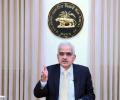
The challenge for the RBI in 2024 is likely to be less about containing elevated inflation and more about curbing excessive financial market exuberance and a 'problem of plenty', notes Sajjid Chinoy, Chief India Economist JP Morgan.
 © 2026 Rediff.com - Advertise with us - Disclaimer - Privacy Policy - Sitemap - Feedback - About us - Terms of use - Grievances